
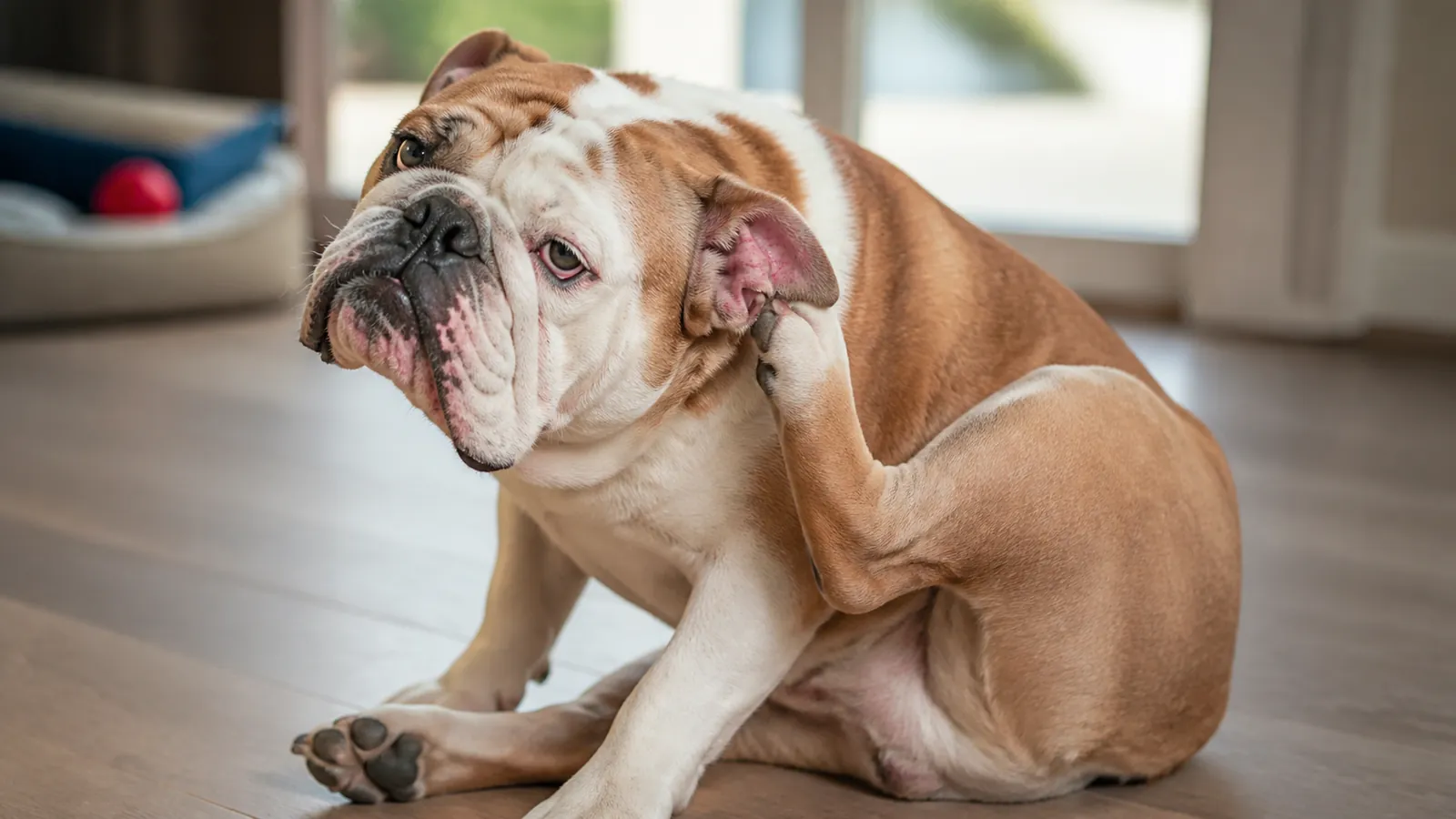
An ear infection that looks better is not always one that is gone. Most dogs stop shaking their head within a few days of starting medication, while yeast or bacteria are still living deep in the canal where you cannot see them. End the treatment there and the infection rebuilds, which is why an ear can seem fine for a few weeks and then flare again, a little angrier each round. The other piece is whatever set it off: allergies, water trapped after a bath or swim, a hormone condition, or a foxtail lodged out of sight. Clearing the infection all the way and finding what started it are the two things that break the cycle.
Ear trouble is one of the most common reasons dogs come to see us at South Town Animal Hospital in South Elgin. We start with a full look inside the canal and a sample of the discharge under the microscope, so treatment is aimed at the yeast or bacteria actually causing the problem. When infections keep returning, we look for what is driving them, from allergy consults to bloodwork when a hormone condition is in question, and we recheck before calling an ear resolved. If your dog is shaking their head, scratching, or smells sour on one side, reach out to us and we will get them in, often the same day, along with a home care and maintenance plan that makes the next flare far less likely.
Important Considerations for Ear Infections in Dogs
- Most ear infections are a symptom of something else, and allergies sit at the top of the list for dogs whose ears keep flaring.
- An ear can look calm on the outside while yeast or bacteria are still living deep in the canal, which is why the recheck matters as much as the medication does.
- Head shaking, a sour smell, dark discharge, or pain that returns within weeks of finishing drops calls for a look inside the canal, not another round of the same treatment.
- A short home routine prevents a lot of repeat trouble: drying ears after swimming, checking for grass awns after outdoor time, and cleaning on a schedule that suits your dog rather than a fixed calendar.
Why do dogs get ear infections in the first place?
Every dog's ear canal carries a small population of yeast and bacteria that a healthy skin barrier holds in check. An infection means something broke that balance, and the usual culprits are inflammation from allergies, moisture that never dried out, or something physical sitting in the canal that shouldn't be there.
The shape of the ear doesn't help. A dog's canal runs straight down and then turns inward toward the eardrum, so water and debris don't drain the way they would from a simple tube. Warm, dark, and humid is exactly what Malassezia yeast likes, and an overgrowth can bloom within days of a swim.
For a lot of dogs, an itchy ear is the first place allergies show up, because the same inflamed skin that drives paw licking and belly redness also lines the ear canal. Families often notice the head shaking weeks before they connect it to the feet.
Early skin changes are quiet ones, which is why preventive care and routine wellness exams earn their keep. A faintly red canal is far easier to settle than an ear that's been simmering since spring.
Why do my dog's ear infections keep coming back?
Ears come back for two reasons: the last infection was never fully cleared, or whatever started it is still going. Recurrence is a clue rather than bad luck, and the pattern of when the flares happen, which ear is affected, and what else your dog is doing usually points at the cause. Here's what we look for.
- Moisture and ear shape: Heavy, hairy, or pendulous ears hold humidity after every swim, bath, and rainy walk, and a canal that never fully dries stays hospitable to yeast.
- Foreign material: A single grass awn can work its way deep into the canal and set off sudden, one-sided pain and frantic head shaking, which is why foxtails turn up so often in dogs who hike, hunt, or run through tall summer grass.
- Allergies: Food and environmental sensitivities keep the canal irritated between flares, so the ear never returns to a normal baseline and the next overgrowth needs almost no help getting started.
- Hormone conditions: Weight gain, a dull coat, and flagging energy alongside repeat ear infections can point to hypothyroidism, since low thyroid hormone changes how well the skin holds off bacteria and yeast. Drinking and urinating more than usual, a pot-bellied silhouette, and skin that seems thin or slow to heal make up the pattern that raises Cushing's disease as the reason infections keep circling back.
- Resistant organisms: Round after round of the same medication selects for bacteria that no longer answer to it, and Pseudomonas is the usual suspect in an ear treated several times without a culture.
When the whole-body pattern fits an endocrine problem, hormone testing and reference lab work settles the question, and managing that condition often does more for the ears than any drop ever will.
What are the warning signs of chronic or complicated ear disease?
The signs that separate a stubborn ear from a routine one are relapse within a few weeks of finishing medication, head shaking that never fully stops, a sour smell, heavy brown or yellow discharge, and a canal that looks red, swollen, or darker and thicker than it used to be. Pain on touch belongs on that list too.
Enough head shaking can rupture the small blood vessels inside the ear flap, and the puffy, fluid-filled pinna that results is an ear hematoma that has to be treated on its own, not just medicated along with the infection underneath.
Balance changes deserve their own mention. A head tilt, an unsteady walk, or a droopy eyelid on one side suggests the middle or inner ear is involved, and that's a see-us-today problem rather than a wait-and-watch one.
Left alone, months of inflammation remodel the canal itself. The lining thickens, the opening narrows, and in long-standing cases the cartilage turns rigid and calcified, so medication can no longer reach where the infection lives. That end point is what all of this is aimed at preventing.
| What you're seeing | Usually a simple infection | Suggests chronic or complicated disease |
|---|---|---|
| Timing | First episode, or years between flares | Back within weeks of finishing medication |
| Discharge | Small amount, resolves with treatment | Heavy, dark, or foul smelling, keeps returning |
| The canal | Pink to red but open | Thickened, narrowed, or hard to the touch |
| Comfort | Scratching that eases in a few days | Constant shaking, crying when touched, a swollen ear flap |
| Elsewhere on your dog | The ear only | Itchy feet, skin infections, coat or energy changes, head tilt |
If your dog's ears keep landing in the right-hand column, let's get your dog seen before the next round of drops, because the same treatment tends to buy the same three weeks.
How do you figure out what's causing a recurring ear infection?
Recurring ears get a stepwise workup instead of another guess at drops. What we find on the exam and under the microscope decides what comes next: a culture for a resistant infection, blood testing for a hormone condition, or a strict food trial. Each step narrows down what's driving the flares.
A thorough ear exam means looking all the way down the canal with an otoscope to see whether the eardrum is intact, which changes both the diagnosis and which medications are safe to put in the ear. In a painful or swollen ear, that view sometimes has to wait for sedation, and it's worth waiting for.
Yeast, cocci, and rod-shaped bacteria each call for a different medication, and ear cytology is the quick swab-and-microscope step that tells us which one we are actually treating. When an infection has already shrugged off two or three prescriptions, a culture and sensitivity test names the organism and shows which drug still works against it.
Our in-house bloodwork and digital imaging come into play when the ear is one piece of a bigger picture, whether that's thyroid values in a dog who's gained weight or a skull film in a dog whose signs suggest the middle ear. Food is the other common thread. No blood test reliably identifies a food allergy, so an elimination diet trial run strictly for eight to twelve weeks, with no treats and no table food, is the only way to confirm one.
How are recurring ear infections treated?
Treatment runs in four layers: clear the active infection, recheck to confirm it's truly gone, manage whatever set it off, and, for a canal that's beyond saving, consider surgery. Skipping those middle layers is how a dog ends up on their fifth round of drops in a year.
Clearing out the active infection
Medication can't work through a canal packed with debris, so cleaning comes first. Some dogs tolerate a gentle flush awake; others do better sedated, particularly if the ear is painful or a grass awn is sitting against the eardrum. Once the canal is open, drops chosen from the cytology reach the organism they're meant for, and oral antibiotics or anti-inflammatories get added when the tissue is badly swollen or deeper structures are involved.
Effective ear cleaning means filling the canal with solution, massaging the base until you hear it squish, letting your dog shake, and wiping only what you can see. Cotton swabs pack debris deeper against the eardrum instead of removing it.
Two home shortcuts reliably make things worse. Never use leftover drops or another dog's medication, because the wrong product in an ear with a ruptured eardrum can damage hearing and balance. Skip the vinegar, peroxide, and alcohol mixes too; they sting a raw canal and add inflammation to a problem that already has plenty. And finish the full course even after the shaking stops, since the organisms that survive a half-finished treatment are the hardest ones to kill next time.
Why the recheck is the step that matters
The outside of the ear calms down first. Surface irritation eases within a few days while the deeper canal, the part nobody can assess without an otoscope, may still be loaded. A recheck is a quick look and one more swab: a clean slide means we stop, and a dirty one means we adjust before a partly treated infection becomes a resistant one.
Treating what set the ear off
Clearing the infection buys comfort. Managing the cause buys months. For allergic dogs that usually means year-round control with anti-itch medication, immunotherapy, or a food change, and we'll talk through diet and nutrition guidance if a trial is the right next move. When thyroid or adrenal disease is behind it, treating that condition is what finally lets the skin defend itself. Occasionally the driver is physical rather than allergic, and polyps arising from the middle ear keep inflammation going no matter how many rounds of drops a dog gets, so the ear will not truly settle until they are removed.
When a canal is past saving
A small number of dogs reach the point where no medication can help, and they're often the ones who've been uncomfortable for years. When a canal has scarred and narrowed to the point that medication simply cannot reach the infection, total ear canal ablation removes the diseased canal for good, and most dogs come out of it far more comfortable than they were living in chronic pain. That operation isn't in the same category as the soft tissue surgery we perform here, so we refer it to a board-certified surgeon, coordinate the referral for you, and stay involved with the recovery.
How do I keep my dog's ears healthy long term?
Prevention is mostly maintenance, and it's specific to the dog in front of us. An ear that traps water needs a drying habit, an allergic dog needs the allergies handled through the whole year, and a dog who runs through fields needs a check after every outing. Matching the routine to the ear is what stops flares from stacking up.
| Your dog | What raises the risk | The routine that helps |
|---|---|---|
| Swims or gets bathed often | Water sitting in a canal that can't drain | Dry the ears after every swim or bath, with a drying cleaner if we've recommended one |
| Floppy or hairy ears | Poor airflow and trapped humidity | Regular checks and a cleaning schedule set for their ears specifically |
| Allergic dogs | Skin that stays inflamed year-round | Keep allergy control going through the good stretches, not just the bad ones |
| Hikes or runs in tall grass | Grass awns working into the canal | Check ears, feet, and armpits after every outing |
| Puppies | Ears nobody has handled yet | Short, positive ear handling now, so cleaning isn't a wrestling match at three years old |
Skin with a strong barrier flares less, and nutrition for skin health, particularly omega-3 fatty acids and a complete, balanced diet, is one of the quieter pieces of long-term ear control. We're glad to go over food and supplement choices at your next visit and tell you honestly whether a supplement is likely to help your dog.
Prevention also holds up better when someone is checking on it, so wellness plans built around your dog's lifestyle put the ear routine right alongside vaccines and parasite prevention. A retriever who swims all summer and a couch-loving senior don't need the same plan.
What Dog Families Ask Us About Itchy, Smelly Ears
Can I use the drops left over from my dog's last ear infection?
It's the most common shortcut we see, and it's the one that costs families the most time. The organism behind this flare may not be the one those drops treat, so the ear gets three more weeks of inflammation and no progress. There's a safety piece as well: if the eardrum has ruptured, certain medications can damage hearing and balance, and nobody can know the eardrum's condition without looking. Never use another dog's medication either.
How quickly does an ear flare need to be looked at?
Most ear infections aren't emergencies, but they're miserable, and they get harder to treat the longer they run. Sudden one-sided pain after a walk through tall grass, a head tilt or wobbly gait, or an ear flap swelling like a pillow should be seen that day. For everything else, sooner still beats later. We hold room for same-day visits for urgent problems during our regular hours, so an ear that started this morning doesn't have to wait out the week.
Should I be cleaning my dog's ears every week?
Not necessarily. A dog with open, dry, trouble-free ears may need cleaning only now and then, and scrubbing a healthy canal weekly can strip its natural oils and create the irritation you were trying to avoid. Dogs who swim, carry heavy ear flaps, or live with allergies usually do need a set schedule. Tell us what your dog's ears look like in an ordinary week, and we'll pick a frequency and a cleaner that fit them.
Getting Ahead of Your Dog's Next Ear Flare
A dog who keeps getting ear infections isn't a difficult patient, and you haven't done anything wrong. It almost always means something underneath hasn't been found yet, and that's a solvable problem once someone goes looking. Bring us the history, the pattern, and the ear itself, and we'll sort out what's feeding it and build a plan you can keep up with between visits.
If the head shaking has started again, start a plan for your dog's ears with our team at South Town Animal Hospital in South Elgin.
Written by the team at South Town Animal Hospital, South Elgin. Published September 16, 2026.
Anything here sound like your animal? Call (847) 695-7387.