
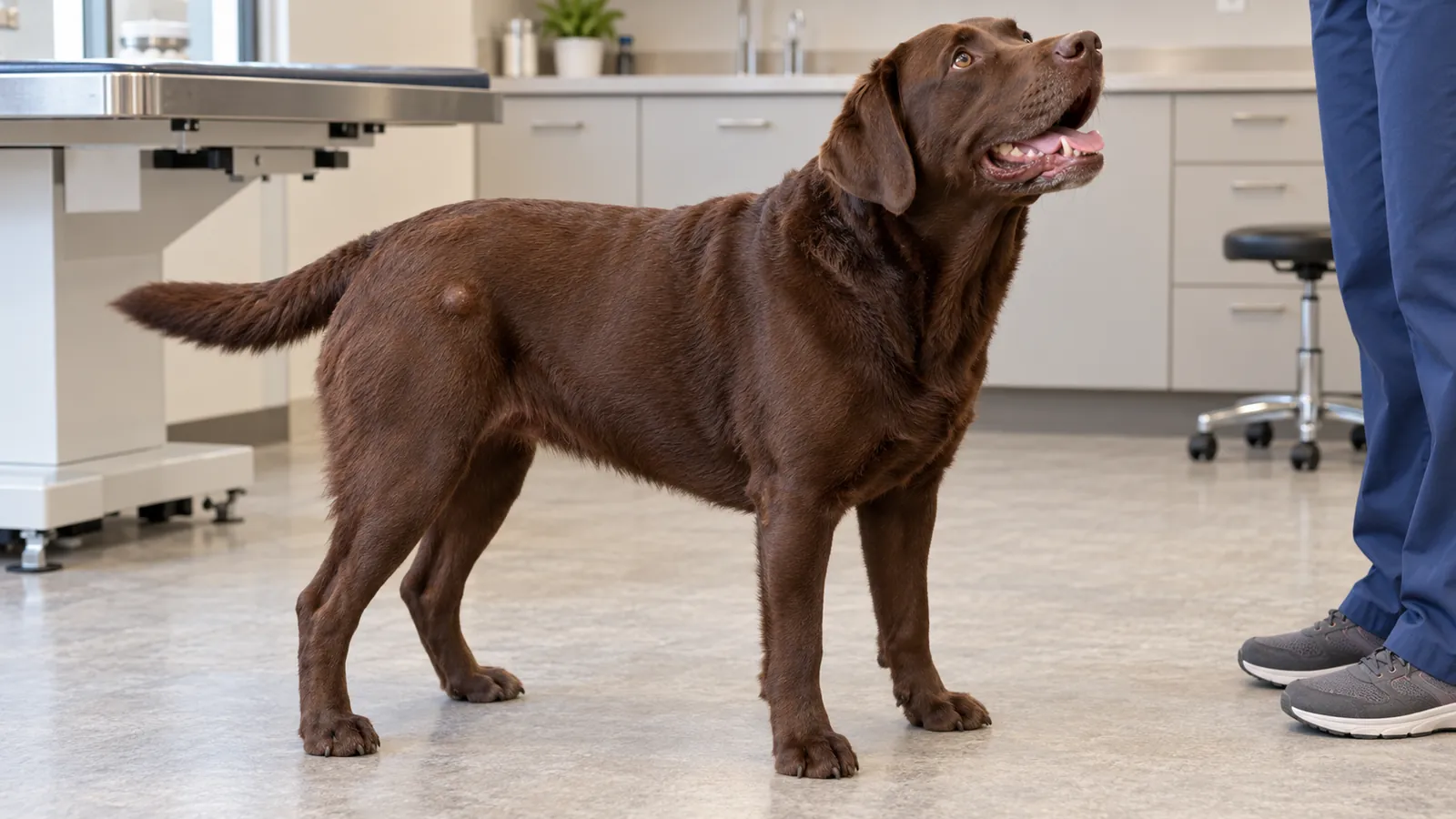
When you find a new lump on your dog or cat, the question is whether to keep an eye on it or have it tested, and only one of those two gives you an answer. Plenty of what we check turns out to be benign, and in dogs that usually means fatty tumors, cysts, or the wart-like sebaceous growths that are common from middle age on. A skin mass on a cat is less likely to turn out harmless, so we are quick to sample those. The trouble is that none of them can be told apart from a mast cell tumor or another skin cancer by look or feel alone, and the masses that matter are much easier to treat while they are still small.
A visit for a new mass at South Town Animal Hospital in South Elgin is built to answer the one question a look cannot: we examine the lump, take a sample, and get an answer to what exactly is growing. That result is what decides the next step, whether the mass can be left alone and rechecked or should come off. If it should come off, mass removals are part of the soft tissue surgery we do here, with full anesthetic monitoring and multimodal pain management from start to finish. We keep room for same-day visits, so if you have found something new on your dog or cat, come in and have it checked.
A New Lump: The Four Things That Matter
- Benign and malignant masses can feel identical under your fingers, so a sample is what tells them apart.
- A skin mass on a cat carries a higher chance of being malignant than one on a dog, so feline lumps get sampled sooner rather than tracked.
- Fast growth, bleeding, an open sore, pain, or a lump that feels anchored to the tissue underneath all mean it should be seen within days.
- A needle sample is quick, often done with your pet standing in the exam room, and reading those cells is what settles whether a mass needs to come off.
Which Lumps on Dogs and Cats Are Usually Harmless?
Harmless masses tend to share a few traits: soft or smooth, slow to change, movable under the skin, and painless when handled. Those traits make a lump less worrying rather than safe to ignore, so even a textbook-looking fatty tumor gets sampled the first time we meet it.
The benign growths we name most often in dogs:
- Fatty tumors: Lipomas are soft, movable pockets of fat that sit just under the skin along the chest, belly, and upper legs. They show up most in middle-aged and older dogs and grow slowly.
- Blocked oil glands: A firm bump that occasionally opens and drains thick, grayish material is often one of the sebaceous cysts that form when an oil gland plugs up and keeps filling. They can flare and get sore.
- Young-dog bumps: Histiocytomas turn up as small, red, hairless buttons on the head, ears, and legs of dogs under three, and most shrink away on their own within one to three months.
- Warty growths: Papillomas are virus-related warts on the lips and muzzle of young dogs, and older dogs grow the cauliflower-textured sebaceous growths that dot the back and legs. Both are mostly cosmetic unless one gets chewed or caught on a collar.
Cats get far fewer of these benign growths, so a feline skin mass is always taken seriously.
When Should a Lump Be Checked Right Away?
Any mass that's growing week to week, bleeding or oozing, open on the surface, sore to the touch, or stuck to the muscle underneath should be seen within a few days rather than at the next routine visit, and so should any lump whose texture or color has shifted.
A few spots raise the priority on their own:
- The mammary chain: A lump along the mammary chain in a dog or cat who isn't spayed needs testing promptly.
- Over a lymph node: A firm swelling under the jaw, in front of the shoulders, or behind the knees can be an enlarged lymph node rather than a skin growth.
- On a toe or in the mouth: Masses in these locations tend to be more aggressive.
- A cat's injection site: A firm lump where a shot was given matters too, especially one still there three months later, one that keeps growing, or one that opens up.
The types of cancer that begin in the skin range from growths that stay put and invade locally to tumors that seed lymph nodes and organs. Some sit unchanged for months before they take off, so even a quiet lump needs a measurement and a sample.
Size also changes the surgery. A pea-sized tumor usually comes off through a small incision with a margin of normal tissue around it, while the same tumor at golf-ball size can mean a bigger operation and a harder time closing the skin.
What Does a Cancerous Lump Look Like?
Cancer doesn't have one look. Irregular borders, a surface that ulcerates and refuses to heal, sudden growth after months of nothing, and whole-body changes like lethargy or weight loss are the signs of cancer that move a lump from “probably benign” to “high likelihood of cancer”. None of those signs is proof either way: some cancers show none of them, and a harmless cyst can look alarming the week it ruptures.
How Do Vets Figure Out What a Lump Is?
We start with our hands and your pet's history: where the mass sits, how deep it goes, whether it slides under the skin or feels rooted, how long it's been there, and what it's done since. That shapes the next step, usually collecting cells and having them read.
A lump on an eyelid, between the toes, or over a joint raises different questions than one on the flank, since what lies underneath changes how it would come off. Breed and species narrow the odds further.
The skin cancers we see most in dogs and cats:
- Mast cell tumors: A mast cell tumor can show up as a smooth lump under the skin or as a red, itchy patch that swells and shrinks from one day to the next. Boxers, Boston Terriers, Pugs, and Labrador Retrievers are at higher risk. Grade, meaning how aggressive the cells look under the microscope, drives the plan, and many low-grade tumors are handled with removal alone.
- Squamous cell carcinoma: White cats and cats with thin fur over the nose, eyelids, and ear tips carry the highest risk of squamous cell carcinoma, since sun exposure drives it. It starts as a crusty sore or small raised plaque and digs into local tissue instead of forming a round lump.
- Melanoma: Dark, pigmented masses on the gums, lips, nail beds, or eyelids raise real concern, since melanoma behaves far more aggressively in those spots than a pigmented spot on haired skin does.
- Soft tissue sarcomas: In dogs and cats these feel like firm masses fixed in place, change little month to month, and need wide margins at surgery because they send fingers of tumor into the tissue around them.
What Happens During a Fine Needle Aspirate?
A fine needle aspirate pulls a few cells out of a mass through a small needle, and cytology on that sample sorts fat, bacteria, inflammatory cells, and cancer cells apart under the microscope. Many pets sit through it standing in the exam room.
A growth on a sensitive area or on a pet who has had enough handling may require sedation to sample safely. We add other tests as a case calls for them:
| Test | What it answers |
|---|---|
| Fine needle aspirate with cytology | Which cells make up the mass |
| Biopsy or full removal with pathology | Exact tumor type, grade, and whether the edges came out clean |
| Bloodwork and urine testing | Whether anesthesia is safe, and whether something else is going on |
| Chest X-rays and lymph node sampling | Whether a known cancer has spread before surgery |
What Else Can Cause a Lump That Isn't a Tumor?
Plenty of lumps aren't growths at all. Infection, allergic swelling, parasites, and inflamed skin can all feel like tumors under your fingers, and each one needs a different treatment. Several of them come up over hours rather than months.
- Infection: A warm, painful swelling that shows up almost overnight on a cat who goes outside and scuffles is more often an abscess walled off under the skin after a bite wound than a tumor. It needs drainage and antibiotics rather than watchful waiting, and dogs get them from punctures that sealed over.
- Allergic swelling: Raised, blotchy welts that come up within minutes to hours of a vaccine, an insect sting, or a new food are hives rather than growths, and the muzzle and eyelids often puff up alongside them. Swelling that spreads toward the throat, or comes with vomiting, weakness, or trouble breathing, is an emergency.
- Parasites: An engorged tick feels like a small, firm skin tag until you part the hair and see the legs. Ticks stay active around South Elgin from spring well into fall, so year-round tick prevention makes one common cause of a mystery lump less likely.
- Feet and pressure points: A hot, painful swelling between the toes is often interdigital furunculosis, a deep skin inflammation driven by trapped hair and bacteria, and it needs treatment rather than monitoring. Elbows and hocks build firm calluses from hard floors.
Never squeeze, lance, or drain a lump yourself, since an abscess pushed the wrong way drives infection deeper into the tissue. Never give a human allergy, cold, or pain product from your own shelf either, because combination formulas and human anti-inflammatories can cause serious harm in dogs and cats.
Does Every Lump Need to Come Off?
Plenty of masses can stay where they are, with a measurement in the chart and a look at the next visit. Others need to come off. The cells decide which, along with where the mass sits, how fast it's growing, and whether it bothers your pet day to day.
When Removal Is the Right Call
Surgery is usually the answer when cytology points to cancer, when a mass is clearly growing, or when it keeps getting licked, chewed, or caught on a collar. Comfort counts too: a benign lipoma in an armpit that changes how your dog moves, or a growth on an eyelid rubbing the cornea, is worth taking off even though the cells are harmless. Surgical removal also gives a more complete answer, since a pathologist reads the whole mass and its margins instead of a few cells. Our doctors go through the choices with you, including what waiting would mean.
What Recovery Looks Like After Surgery
When the pathology report comes back, we go over what the mass was, whether the edges came out clean, and what comes next. Incisions need about two quiet weeks: leash walks only, cats kept off high perches so a jump doesn't pull at a closing incision, and no baths until the skin has sealed. A cone or recovery suit stays on, since a few minutes of licking can open a tidy closure.
Mild swelling in the first days is expected, but spreading redness, discharge, or a gap opening along the incision means a call that day. Masses can also regrow, benign ones included, so that spot gets checked at every visit afterward.
How Do I Keep Track of Lumps at Home?
Keep a short written record and check your pet by hand once a week. Photograph each bump with a coin beside it for scale, and note the date and which side of the body it's on. It’s easy to miss slow growth of a mass when you see it every day.
During a brushing or a belly rub, run your hands over the chest, armpits, groin, legs, and between the toes, and look at a cat's ears, nose, and eyelids while you're there. Our whole health care exams include a nose-to-tail check, and handing over your list means nothing gets skipped on a dog with a lot of fatty lumps.
What Else Do Families Ask About Lumps and Bumps?
Can a lump go away on its own?
Some lumps do go away on their own. Histiocytomas on young dogs usually shrink away, hives settle once the trigger is gone, and a cyst can rupture, drain, and flatten out. But a mass getting smaller doesn't confirm it was harmless, and some tumors swell and shrink from week to week. If a bump disappears before your appointment, keep the appointment and bring the photo.
My dog has several lumps. Do they all need to be tested?
On a dog with a long history of fatty tumors, we don't re-sample every one at every visit. We map them, measure them, and test the ones that are new, growing, or different in texture from the rest. That map is what makes it possible to call a lump new, since one firm mass among many soft ones is easy to overlook.
Does a lump that slides around under the skin mean it's benign?
A mass that moves freely is less likely to be invading the tissue beneath it, so it's a mildly reassuring sign rather than a diagnosis. Mast cell tumors are often perfectly movable, and so are some soft tissue sarcomas early on, so the cells still settle the question.
Getting an Answer on a New Lump
If you've found a bump you're unsure about, reach out and we'll get your dog or cat in at South Town Animal Hospital in South Elgin for a sample and a real answer instead of a guess.
From South Town Animal Hospital, South Elgin. Published November 12, 2026.
Anything here sound like your animal? Call (847) 695-7387.