
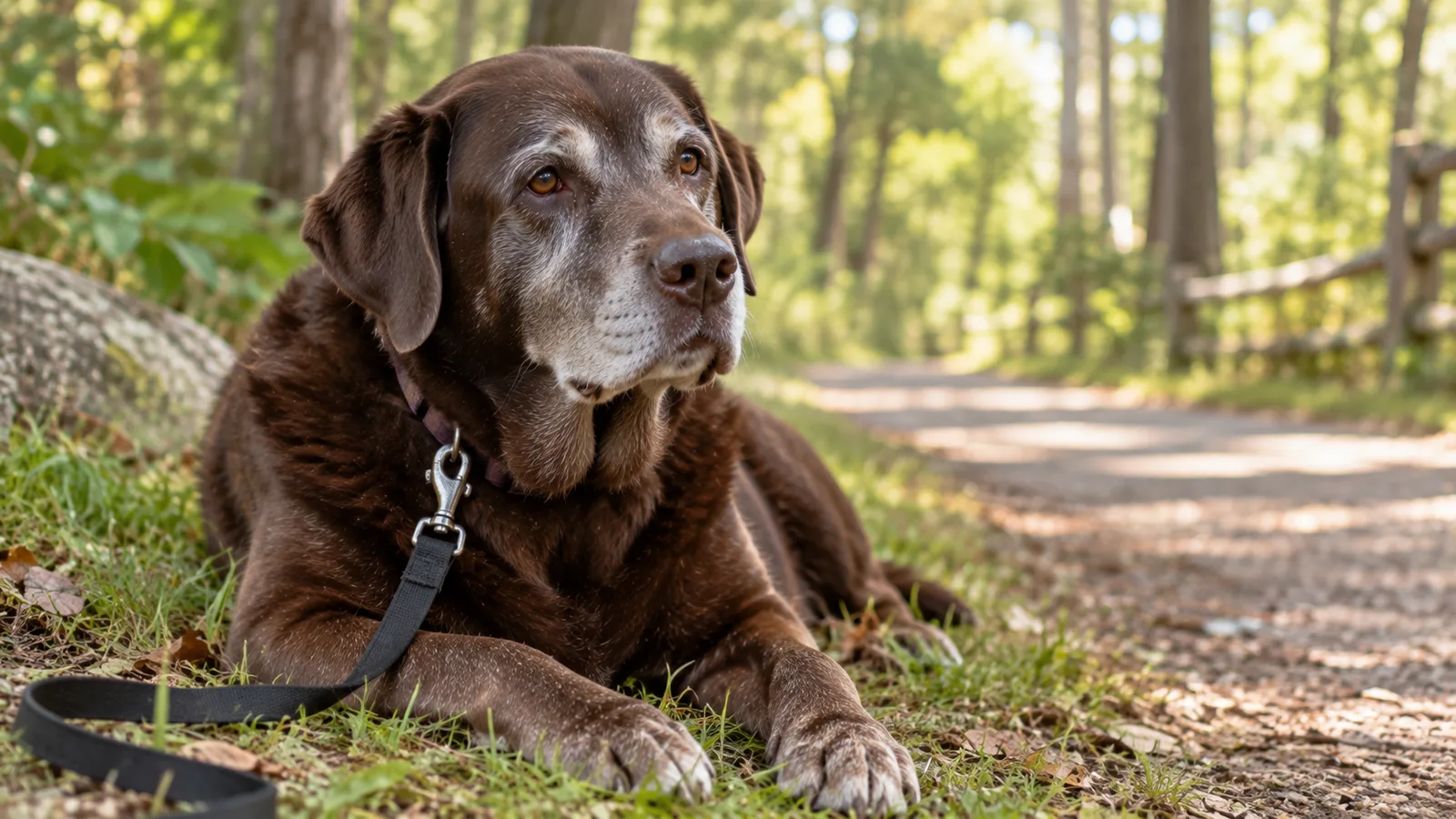
Slowing down is easy to write off as age, and it is also one of the first ways heart disease shows up in dogs and cats. Dogs usually give you something to notice, like a cough or less stamina on a walk that used to be easy, while cats hide illness so well that the disease is often advanced before anyone suspects it. That gap matters, because a heart condition found early can often be managed for years with medication and regular rechecks, while a late diagnosis tends to arrive as a crisis. Other signs mean the disease is no longer early and cannot wait: labored or open-mouth breathing, a resting respiratory rate that keeps climbing, fainting or collapse, or a cat whose back legs suddenly stop working.
South Town Animal Hospital in South Elgin listens to your pet's heart at every wellness visit, because in dogs a murmur usually turns up long before anything looks wrong at home. Cats are harder, since many never develop a murmur anyone can hear, so when the history or the breed points that way, we look further with x-rays, blood pressure checks, and imaging. A heart condition is managed over time rather than fixed once, and the earlier we start, the more of your pet's good years we have to protect. If a walk has gotten harder for your dog, or your cat has gone quiet, schedule a visit and we’ll find the cause together.
If You Only Remember Four Things About Your Pet's Heart
- Dogs most often develop a leaky heart valve, while cats most often develop thickened heart muscle, and the two look nothing alike at home.
- A murmur heard during a routine exam is usually the first clue in dogs, often years before anything seems wrong.
- Counting breaths while your pet sleeps is the most useful thing you can do at home, and under 30 breaths per minute is the normal range.
- Heart disease is managed rather than cured, and pets diagnosed early often do well on daily medication for years.
What Kinds of Heart Disease Do Dogs and Cats Get?
Heart disease isn't one condition. It's a category covering leaky valves, weakened or thickened muscle, and rhythm problems, and the specific diagnosis shapes everything that follows. Both species get it, but the common conditions differ by species, and so does the way the first signs look at home.
The Heart Conditions We See Most Often in Dogs
The most common canine heart problem is mitral valve disease, where the valve between the left chambers stops sealing and a little blood washes backward with every beat, usually in small and medium breeds and over a span of years. That backward flow creates the murmur we hear through a stethoscope, often long before your dog feels any different.
In large and giant breeds, dilated cardiomyopathy is the bigger concern: the heart muscle itself weakens and the chambers stretch until the pump can no longer move blood efficiently, and arrhythmias often show up alongside it. Rhythm abnormalities can also stand alone, with no valve or muscle problem behind them.
The Heart Conditions We See Most Often in Cats
Hypertrophic cardiomyopathy is by far the most common heart disease in cats, thickening the wall of the left ventricle until the chamber holds less blood with every beat, and it can progress for years before anything looks wrong at home. Restrictive cardiomyopathy, where the muscle stiffens and can't relax properly between beats, and the now-uncommon feline form of dilated cardiomyopathy round out the list.
Here's what matters most for cat families: many cats never develop a murmur anyone can hear. The exam that catches most canine cases can come back clean in a cat, and any quiet change counts.
| Dogs | Cats | |
|---|---|---|
| Most common condition | Mitral valve degeneration | Hypertrophic cardiomyopathy |
| Typical patient | Small and medium breeds, middle-aged and older | Any breed, often middle-aged males |
| Murmur? | Usually present, often early | Frequently absent despite real disease |
| What families notice | Cough, less stamina on walks | Quieter behavior, faster breathing, sometimes nothing |
| Classic emergency | Fluid in the lungs | Fluid in or around the lungs, or a clot in the back legs |
Which Dogs and Cats Are Most at Risk?
Middle-aged and senior pets carry most of the risk. Small and medium breed dogs lean toward valve disease, while large and giant breeds carry higher rates of the muscle form, and cats of any breed can develop thickened heart muscle. Genetics drive a large share of both.
Ask us about your pet's breed-specific health risks, because some breeds carry dramatically higher cardiac rates than the general population, and that answer decides how early screening starts. Cavalier King Charles Spaniels and Dachshunds are the dogs we ask valve questions about first. Dobermans, Boxers, and Great Danes raise the question of weakened heart muscle instead. Maine Coons, Ragdolls, and plenty of ordinary domestic shorthairs develop the thickened feline form without a pedigree to warn you. Diseases like hyperthyroidism also increase risk in cats. Tell us if a parent, a littermate, or a previous pet of the same breed had a cardiac diagnosis. For breeds with known risk, preventive planning for higher-risk breeds means building screening into the visits you already have on the calendar.
What Do the Early Signs of Heart Disease Look Like?
The earliest signs are quiet ones. Lagging on a walk that used to be easy, a cough that shows up at night, and a longer wind-down before sleep are all early signs of heart disease in dogs, and each one is easy to file under ordinary aging. Cats give you even less.
What separates an off day from a pattern is tracking. One slow walk means little. Three weeks of shorter walks means something. Note the date when you first notice a change.
- Less stamina: dogs shorten their own walks or lag behind, and cats stop jumping to perches they've used for years.
- A new cough: far more common in dogs, and often worse at night or after lying down.
- Harder breathing at rest: the belly working, or visible effort while your pet sleeps.
- Restlessness overnight: pacing, shifting position, trouble settling.
- Appetite and weight changes: meals left half-finished, or a slow slide down the scale.
- Quiet feline signs: more hiding, less grooming along the back and hips, less interest in the household.
When Does Heart Disease Become an Emergency?
Some signs mean now, not next week. Labored breathing at rest, open-mouth breathing in a cat, and gums that have gone pale or bluish all point to respiratory distress, which can deteriorate within hours rather than days.
A cat who was fine this morning and is now dragging both back legs, crying out, with paw pads gone cold, has almost certainly thrown a saddle thrombus: a clot that left the heart and wedged where the aorta divides toward the hind limbs. It is severely painful, and for many families it's the first hint their cat's heart was ever in trouble. Collapse, fainting, and a resting breath count that stays above 40 belong here too.
Two things make a bad situation worse. Never give human heart, blood pressure, or pain medication to a pet, and keep handling to the minimum it takes to get into the carrier, since stress raises oxygen demand right when your pet can least afford it.
Call us on the way in if we're open. We provide same-day urgent care during our open hours for South Elgin pets and will tell you immediately whether to come here or go straight to an emergency hospital, which is also where a critical pet belongs any time we're closed.
How Do We Find Out What's Happening Inside the Heart?
No single test answers the whole question. A heart disease diagnosis is built in layers: what the stethoscope picks up, what radiographs show about heart size and fluid, what bloodwork says about organ function, and what an echocardiogram reveals about wall thickness, chamber size, and how well the heart contracts and relaxes.
Most of that first layer happens during one visit here. In-house bloodwork, digital radiographs, and blood pressure measurement cover organ function, heart size, fluid in the lungs, and a pressure reading before you go home. When the rhythm sounds irregular, an EKG records the electrical pattern and names the arrhythmia.
An echocardiogram is an ultrasound of the beating heart, and it's the study that most directly answers what the disease is and how far along it has gotten. If your pet needs a board-certified cardiologist, we make that referral and coordinate it. NT-proBNP, a blood test that rises when heart muscle is under strain, runs through our reference lab and helps sort which pets need imaging now and which can wait.
How Is Heart Disease Treated in Dogs and Cats?
Heart disease can't be cured, but it can be managed well for a long time. Treatment usually combines several heart disease medications: drugs that lower the heart's workload, diuretics that pull fluid off the lungs, medications that strengthen each contraction, and clot preventives for cats with enlarged chambers.
The plan comes from the diagnosis and the stage, not from the murmur alone. Two dogs with identical murmurs can need completely different prescriptions, or none yet. Pimobendan is a common choice once a dog's heart begins to enlarge, furosemide clears fluid after congestive heart failure develops, and clopidogrel lowers clot risk in cats with a large left atrium.
Rechecks are what let us adjust a dose before a small shift becomes a crisis. Giving medication twice a day forever is a real commitment, too. When a cat can detect a pill through three layers of cheese, flavored compounded chews, liquids, and transdermal gels are worth asking about. Refills and medication questions move through the Client Connection app, which keeps a running-low prescription from turning into a missed week.
What Else Can Go Wrong as Heart Disease Progresses?
The night you notice fast breathing during sleep is often the night the heart runs out of ways to compensate. Congestive heart failure means fluid is collecting in or around the lungs, and that shift can arrive over hours rather than weeks. High blood pressure and kidney trouble commonly ride along with it.
Systemic hypertension travels with cardiac disease often enough that we watch for it, since untreated pressure keeps working on the heart, the kidneys, and the eyes, sometimes causing sudden blindness from a detached retina.
Senior cats in particular tend to carry more than one diagnosis. Kidney disease and hyperthyroidism both complicate cardiac treatment, because the same diuretic that clears the lungs can strain kidneys that were already borderline. Whole-pet care means balancing both with regular lab values instead of chasing one organ. None of this is meant to frighten you. It's what lets you call early, before a rough night becomes an emergency.
How Do You Monitor a Cardiac Pet at Home?
What can you actually do between visits? Watch your pet breathe. Recording a resting respiratory rate is the best early warning we have, and it costs you one minute while your pet is asleep or fully relaxed. One inhale plus one exhale counts as a single breath, and under 30 per minute is where a stable dog or cat should sit.
Count for a full minute, or count for 15 seconds and multiply by four. Write the number down with the date, daily if you can and a few times a week at minimum. Panting, purring, dreaming, and a warm room all skew the result. Wait for quiet sleep.
| The number you counted | What it tells us | Your next step |
|---|---|---|
| Under 30 | Your pet is holding steady | Log it and keep counting |
| 30 to 40 | Higher than we'd like | Count again in a few hours, and call us if it hasn't settled |
| Over 40 | Too high to wait on | Call us that same day |
| Open-mouth breathing, any rate | Emergency | Come in immediately, or go to an emergency hospital if we're closed |
A weekly weight fills in the picture, since fluid gain and muscle loss both register on the scale before either is visible, along with appetite and energy, how many coughing episodes happen in a day, and any new behavior. Kidney values and electrolytes shift once a pet is on diuretics, and recheck lab work stays on the calendar for that reason. If the counting feels confusing at first, ask one of our technicians to walk you through it.
Routine Screening Finds Heart Disease Before the First Crisis
Preventive testing for senior pets is what finds heart disease while it is still silent, when the murmur is new, the pet still feels fine, and every treatment option is on the table. Nothing about that appointment feels urgent, which is exactly the point.
We listen to every heart at every exam, because you can't hear what a stethoscope can. For at-risk breeds and older pets with a suspicious finding, we add a blood test or imaging. Comparing this year's results with last year's makes a gradual change visible in a way one reading never is.
Once a pet is diagnosed, recheck frequency depends on the stage and stability of the disease, though every three to six months is typical for a managed cardiac patient. Senior wellness exams twice a year are where most murmurs are first heard, long before you have any reason to worry.
What South Elgin Pet Families Ask Us About Heart Disease
Does a heart murmur mean my dog has heart disease?
Not every murmur is a disease. A murmur is turbulent blood flow, and it can come from anemia, a fever, or in a puppy a heart that's still developing. In an adult dog, though, a new murmur usually does mean a valve has started to leak. The grade we assign describes the sound, not the severity. Radiographs and an echocardiogram are what separate a murmur we simply watch from one that needs treatment now.
Can a cat have heart disease with no murmur at all?
Plenty of cats with real heart disease never develop a murmur, and some cats with a loud murmur have a structurally normal heart. That's why we lean on other clues: a gallop rhythm, an irregular beat, a resting breathing rate that has crept up, or a breed with known cardiac risk. When something points that way, a blood test or an ultrasound answers the question a stethoscope can't.
Can my dog still go on walks with heart disease?
Most dogs with managed heart disease keep walking, and the movement is good for them. Let your dog set the pace and the distance instead of holding to the old route, skip the hottest part of the day, and turn around at the first sign of hard breathing rather than pushing through. If your dog is suddenly tiring far earlier than last month, give us a call, because that often means the plan needs adjusting.
Caring for a Cardiac Dog or Cat Over the Long Run
Heart disease is managed, not cured, and that's less discouraging than it sounds. Many dogs and cats live comfortably for years after the diagnosis, and three habits carry most of the weight: know which signs matter for your species, count breaths at home, and keep the recheck schedule even during the long stretches when your pet seems perfectly fine.
A diagnosis like this is frightening to sit with, and you shouldn't have to sit with it alone. If a walk has gotten shorter, a cough has started, or you'd just like a baseline before anything is wrong, schedule a cardiac evaluation at South Town Animal Hospital in South Elgin.
Written by the team at South Town Animal Hospital, South Elgin. Published October 1, 2026.
Anything here sound like your animal? Call (847) 695-7387.