
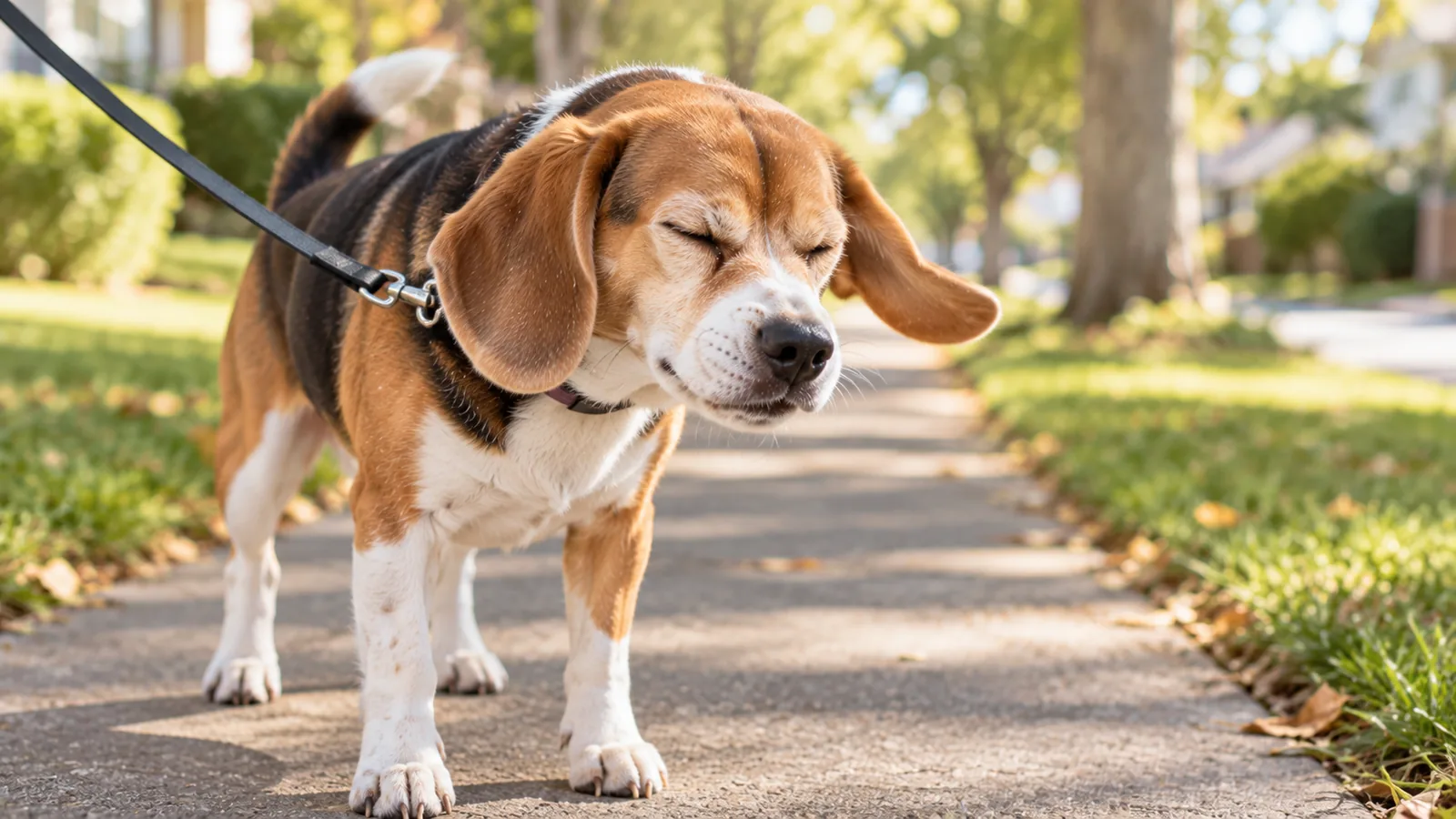
The question you are weighing, usually late at night, is whether tonight's cough or wheeze can wait until morning, and the answer comes down to the pattern rather than the single sound. One cough after a fast drink of water, a snore your pet has had for years, or a short burst of reverse sneezing that settles on its own is usually harmless. A noise that repeats over a day or two, changes in character, or comes with low energy or a lost appetite has earned an appointment. Visible effort to breathe sits in a different category, and that one needs to be seen right away.
A cough you cannot read from the couch is worth a same-day look, and we keep room in the schedule for exactly that kind of visit. South Town Animal Hospital in South Elgin can listen to your pet's chest, take digital x-rays, and run the testing that tells allergies apart from asthma, infection, or a heart problem, so you get a real answer instead of another night of wondering. If your pet is working to breathe or the gums look pale or blue, do not wait for us to open; head straight to one of the after-hours emergency hospitals we work with. Otherwise tell us what you are hearing and we will get your pet in.
What Your Pet's Noises Are Telling You
- A single cough, sneeze, or snort is usually nothing; one that repeats over a day or two, or changes character, needs a visit.
- The sound narrows the list fast: a honk points at the windpipe, a wheeze at narrowed lower airways, a wet crackle at fluid in the lungs.
- Cats hide breathing trouble well, so open-mouth breathing in a cat is an emergency, not a warm-weather habit.
- Chest films, bloodwork, and a careful listen through the stethoscope separate allergies from asthma, infection, heartworm, and heart disease.
Why Do Pets Make Strange Breathing Noises in the First Place?
Dogs and cats can't tell us their chest feels tight, so the noises do that job instead. Each one is air moving past something in the way: swelling, mucus, a floppy airway, or fluid. The sound points to where the trouble sits, and how often it repeats tells us how fast it needs attention. When the noise happens, and whether it has changed since last week, matters just as much, which is why wellness exams earn their keep: we learn what normal sounds like for your pet, and that makes a new noise easy to flag later.
What Do Coughing, Sneezing, and Wheezing Mean in Dogs and Cats?
Coughing usually comes from the lower airways, the windpipe, or the heart. Sneezing comes from the nose. Wheezing means air is squeezing through passages that have narrowed. Each has a harmless version and a serious one, and the difference is almost always how long it lasts and what travels with it. Here's the map we work from:
| Sound | Where It Usually Starts | How Soon to Be Seen |
|---|---|---|
| Dry hacking cough | Windpipe, often infectious | A day or two, sooner if energy drops |
| Moist, deep cough | Lower airways or the heart | A day or two |
| Sneezing with discharge | Nose and sinuses | Within a few days, sooner if discharge is colored or one-sided |
| Wheeze | Narrowed lower airways | A day or two, immediately if breathing looks like work |
| Reverse sneeze | Back of the nose and throat | Only if episodes are frequent or long |
| Snoring | Soft palate and nostrils | If it's new, louder, or comes with gasping |
| Goose honk | Collapsing windpipe | Within the week, sooner if easily triggered |
| Wet gurgle | Fluid in the airways or lungs | Same day |
| Harsh stridor | Larynx | Same day, urgently if your pet is distressed |
| Fine crackles | Lung tissue | Same day |
Which Coughs Can Wait, and Which Can't?
One cough after a gulped bowl of water is nothing. A cough that repeats through the day, or wakes your dog at night, needs a look. Dry hacking that starts a few days after boarding, daycare, or the dog park usually means an infectious airway irritation that spreads easily between dogs, so keep yours home until we've examined them.
A moist, deep cough at night or after your dog lies down can be an early sign of heart disease, often paired with tiring faster on a familiar walk. A cat who crouches low, stretches their neck forward, and hacks without producing anything is rarely working on a hairball; feline asthma creates that exact posture. When coughing lingers past a day or two, bloodwork and chest films separate an airway infection from fluid, a mass, or a heart working too hard.
What Does Constant Sneezing Mean?
A sneeze or two in a dusty room means nothing. A dozen in a row, day after day, means something is irritating the nasal passages and staying put. Fits that come with runny eyes, congestion, and a smaller appetite often trace back to an upper respiratory infection, which moves quickly between cats in shelters, boarding facilities, and multi-cat households.
Dogs sneeze for different reasons. Sudden violent fits minutes after a walk through tall grass often mean a plant awn or grass seed has lodged in one nostril, and those don't work themselves loose. Discharge that's yellow, green, or bloody, especially from one side only, moves the problem up the priority list. Teeth belong on the list too, since an infected upper tooth root can erode into the nasal passage above it. Our team handles dental cleanings, extractions, and dental X-rays, and that imaging finds damage hiding below the gumline.
Why Is My Cat or Dog Wheezing?
A wheeze is a high-pitched whistle, usually on the way out, and it means the lower airways have tightened. In cats, chronic inflammation drives most of it, whether that's asthma or chronic bronchitis, and episodes cluster around dusty litter, scented cleaners, candles, and cigarette smoke. In dogs, allergies to pollen, dust, or household smoke show up as airway irritation alongside itchy skin and repeat ear infections.
Chest films taken here reveal the thickened airway walls and over-inflated lungs of chronic lower airway disease. Any whistle that arrives with effort, a widened stance, or an open mouth skips the wait-and-see step entirely.
Is Reverse Sneezing Dangerous?
Reverse sneezing is that sudden run of loud, snorting inhalations that convinces you your dog is choking, and it settles on its own inside a minute. Small breeds and flat-faced dogs do it most, set off by excitement, a tug against the collar, pollen, or cold air. Nothing is stuck.
Stroking the throat gently, or briefly covering the nostrils to prompt a swallow, usually ends an episode. Frequency changes the picture: several rounds a day, episodes well past a minute, or any bloody discharge needs an airway exam. Catch an episode on your phone if you can, because a video tells us more than the best description.
What Do Snoring, Honking, and Raspy Breathing Mean?
These noises come from the upper airway and the lungs rather than the nose, and they run from lifelong quirk to emergency. Newer, louder, or more frequent is the shift that matters, and so is anything visible: a stretched neck, heaving sides, or a pet who stops mid-activity just to breathe.
When Is Snoring More Than a Quirk?
Plenty of dogs and cats snore, especially the one sprawled belly-up with their tongue hanging sideways, and that version means nothing. A snore that's new, or noticeably louder than a few months ago, is a different story. Narrowed nostrils and an elongated soft palate add up to brachycephalic obstructive airway syndrome, which turns heavy snoring, snorting, and poor heat tolerance into a breathing problem rather than a breed quirk.
Extra weight tightens an already narrow passage, so body condition matters more than families expect. Cats snore less often than dogs, which is why a snoring cat deserves a look: nasal polyps and masses create the same sound.
What Causes a Goose-Like Honk?
A dry, goose-like honk that fires off when a small dog gets excited or pulls against a collar points to tracheal collapse, where the cartilage rings supporting the windpipe flatten as air moves through. Yorkies, Pomeranians, Chihuahuas, and Toy Poodles carry most of the cases, and heat, humidity, and the doorbell set off a round.
Switching from a collar to a harness is the easiest change a household can make. Radiographs taken as your dog breathes in and then out show how far the trachea flattens, which tells us what management makes sense. Weight control and a smoke-free house help too.
What About Wet, Raspy, and Crackling Breathing?
Three sounds here point at different levels of the airway, and all three belong on the same day's schedule.
- A wet gurgle: suggests fluid where air belongs, from pneumonia, inhaled food or vomit, or a heart no longer keeping the lungs clear. Paired with weakness, fever, or visible struggle, it's an emergency.
- Stridor: is a harsh, raspy noise on the way in, meaning the larynx is swollen, narrowed, or blocked. Older large-breed dogs, Labradors especially, are prone to laryngeal paralysis, which starts as a raspy inhale and a hoarse bark long before it becomes a crisis on a hot afternoon.
- Fine crackles: are the popping sounds we pick up through the stethoscope, and they point at the lung tissue itself. With fever, lethargy, and a skipped meal, that can mean pneumonia; fluid backing up from heart disease produces the same finding, so imaging and bloodwork come next instead of cough syrup.
Why Do Flat-Faced Breeds Struggle to Breathe?
Pugs, French Bulldogs, Boston Terriers, Persians, and Himalayans share a compressed skull shape, and short-nosed breeds carry the same soft tissue as a long-nosed pet packed into far less room. That crowding pinches the nostrils and clutters the throat, so noisy breathing and low exercise tolerance come standard. Heat is the dangerous part, because panting is how a dog sheds heat, and a dog who can't move air well can't cool well either. A harness instead of a collar, a lean body, walks in the cool hours, and air conditioning on sticky days all buy breathing room.
Early evaluation matters because years of extra effort thicken and weaken the airway, and that damage doesn't reverse. Widening the nostrils and trimming an overlong palate improves airflow and makes anesthesia and hot weather safer. We handle soft tissue surgery here, and complex airway correction goes to a specialty surgeon we coordinate with for you. Flat-faced cats have the same crowded anatomy, and one who is audible at rest deserves the same workup.
When Is Noisy Breathing an Emergency?
Blue or pale gums, open-mouth breathing in a cat, and a stretched-out neck with the elbows held away from the body all signal respiratory distress, which means being seen right away rather than waiting out the night. Collapse belongs on that list, and so does breathing that stays fast and labored at rest. A cat breathing with an open mouth is not panting the way a dog does; they have been compensating quietly for a while already. A few things make a breathing crisis worse:
- Skip the medicine cabinet: never give human cough syrup, decongestants, combination antihistamines, or pain relievers. Pseudoephedrine and ibuprofen are toxic to pets.
- Don't reach into the throat: blind finger sweeps push objects deeper and can turn a partial obstruction into a complete one.
- Keep things cool and quiet: heat and struggling escalate an airway problem fast, so carry your pet to the car rather than walking them out.
- Don't wait out open-mouth breathing in a cat: it rarely resolves on its own, and cats hold it together until suddenly they can't.
During our hours, call us right away and we'll tell you whether to bring your pet straight to us here in South Elgin or head directly to an after-hours emergency hospital.
How Do We Find Out What's Causing It?
It starts with hands and a stethoscope: listening across every lung field and over the heart, pressing gently on the trachea to see whether that reproduces the cough, checking gum color, and counting the resting breathing rate. Bloodwork and imaging shrink a long list of possibilities down to one or two.
| What We Run | What It Answers |
|---|---|
| Exam and stethoscope | Where the noise originates, and whether the windpipe reproduces the cough |
| In-house bloodwork and urinalysis | Infection, inflammation, organ function, and disease elsewhere |
| Heartworm test | Whether worms in the lung vessels explain the cough |
| Chest X-rays | Heart size, lung patterns, fluid, masses, and tracheal diameter |
| Blood pressure and EKG | Whether the heart is behind the breathing changes |
What Does Lab Work Tell Us About Breathing Problems?
Blood fills in what no film can show. A climbing white cell count leans toward infection, certain patterns suggest allergic or parasitic inflammation, and organ values flag disease pressing on the chest from somewhere else. Coughing and early fatigue can be the first outward signs of heartworm infection, since the worms mature in the vessels feeding the lungs. Heartworm turns up in Illinois dogs every year, so annual testing belongs in the workup for a cough that won't quit. Older pets get more out of screening on a schedule than in a crisis, and senior wellness care builds that bloodwork in before a cough gives us a reason to look.
What Do X-Rays Show?
Our team uses digital radiographs to evaluate heart size, lung patterns, fluid in the chest, and the width of the windpipe, which answers the question for most coughing patients. Blood pressure and an EKG round out the picture when rhythm or circulation is in question. A few cases need a cardiac ultrasound to look at the heart muscle and valves directly, a CT scan, or a camera passed into the airway, and we refer those to a specialty hospital and set up the appointment for you.
How Are Noisy Breathing Problems Treated?
The plan follows the diagnosis, which is the whole reason we test instead of handing over a cough suppressant and hoping. Infections get targeted medication and rest, feline asthma responds to anti-inflammatory therapy through a small chamber and mask, heart disease has good medication options, and a collapsing trachea does best with weight control, a harness, and cough management together. Supportive options such as laser therapy and whole food supplements have a place when a pet carries arthritis or inflammation alongside the cough, and rechecks tell us whether the plan is working.
Questions We Hear About Noisy Breathing
Is kennel cough contagious to my other pets?
The bugs behind that dry hacking cough pass easily between dogs through the air and over shared water bowls, so a coughing dog should stay home from daycare, boarding, and the park until we've cleared them. Cats have their own version, and upper respiratory viruses travel fast between cats sharing a house. Vaccination doesn't make a dog untouchable, but it lowers the odds and softens how sick they get.
My dog only coughs at night. Should I be worried?
Nighttime coughing deserves attention, because lying down shifts fluid and pressure inside the chest, so a cough tied to bedtime often traces back to the heart or airway disease. Bedroom allergens explain some cases, and a collapsing windpipe can flare as a dog settles into position. Mention that timing when you call, because it changes what we look for first.
How do I know if my cat is breathing too fast?
Count while your cat is asleep or resting quietly: watch the chest rise and fall for 30 seconds, then double it. Most healthy cats stay under 30 breaths a minute at rest. A resting rate holding above 40, or breathing where the belly visibly works, is a reason to call. It's one of the most useful numbers a household can track, and it often catches trouble before any sound starts.
Breathing Easy Again in South Elgin
Most of the noises that send families searching the internet at midnight turn out to be manageable, and a fair number turn out to be nothing at all. Bring us the sound, the video, and the pattern you've been noticing, and we'll sort it out together. South Town Animal Hospital offers same-day visits for urgent concerns, so request an appointment and let's find out what your pet has been trying to tell you.
Written by the team at South Town Animal Hospital, South Elgin. Published October 16, 2026.
Anything here sound like your animal? Call (847) 695-7387.