
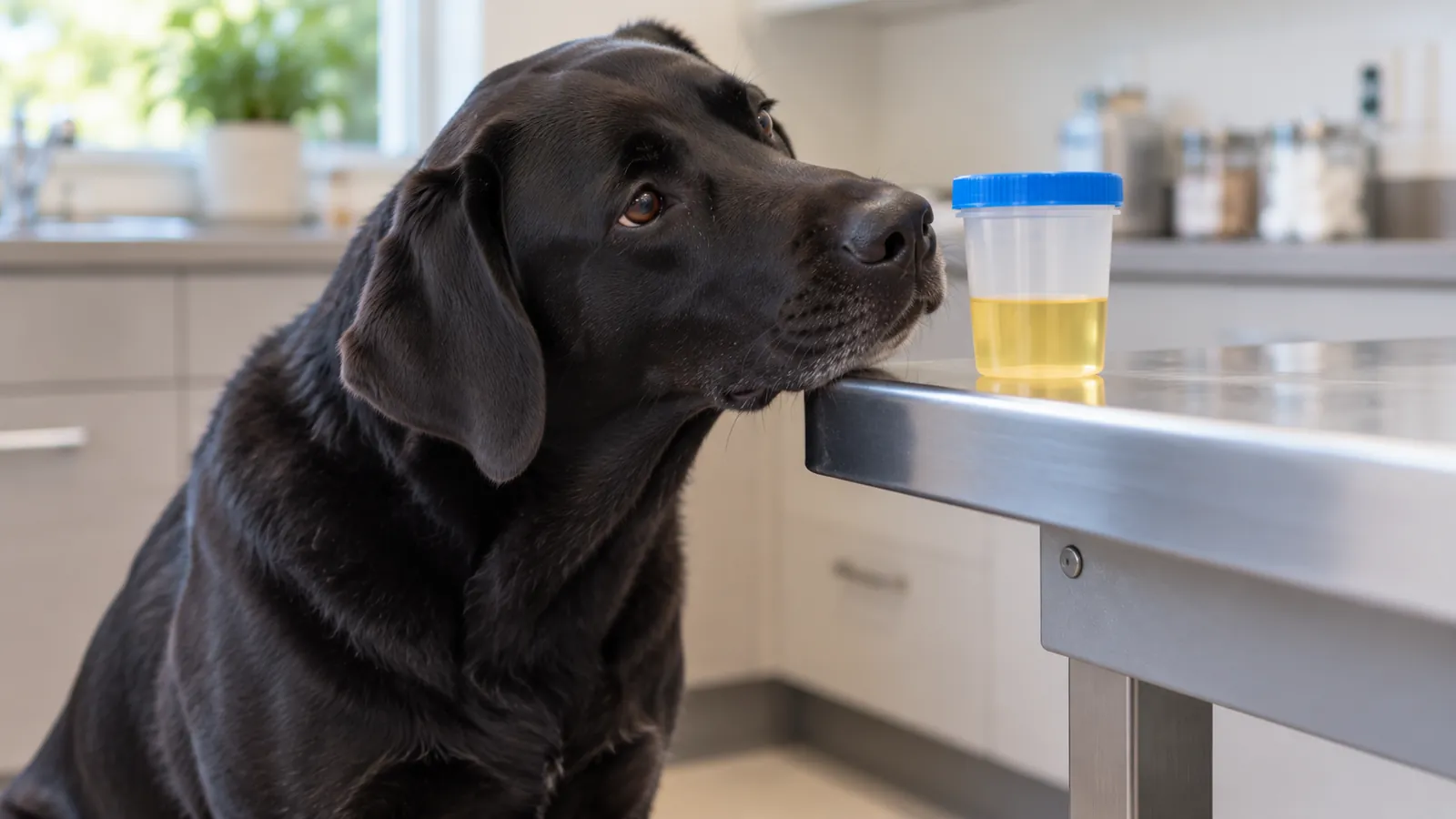
Maybe your dog suddenly needs to go out every 20 minutes. Maybe your cat keeps hopping in and out of the litter box, but there’s hardly anything to scoop. Frequent urination, repeated straining, accidents in the house, or blood in the urine are signs that something is wrong with the urinary tract. Common causes include a urinary tract infection, bladder stones, and bladder inflammation, and most can be treated successfully once we figure out what’s behind the symptoms. But if your pet is trying to urinate and nothing is coming out, that’s an emergency, especially in a male cat.
At South Town Animal Hospital, urinary problems are one of the most common reasons families in South Elgin call us hoping to be seen that day. And there’s a reason we don’t try to diagnose them based on symptoms alone: an infection, bladder stones, and inflammation can look remarkably similar from the outside. Our diagnostic testing can include urinalysis, bloodwork, urine culture, digital X-rays, and ultrasound to help us find the cause and choose the right treatment. We also hold room in our schedule for urgent care visits, because bladder problems rarely wait politely until next week. If you’re worried about a change in your pet’s bathroom habits, reach out right away and we’ll help you figure out how quickly they need to be seen.
What to Know About Urinary Trouble in Pets
- A straining male cat is an emergency: A blocked urethra turns life-threatening in under a day, so a male cat squatting without producing urine needs emergency care immediately.
- The signs all look alike: Infection, stones, crystals, and sterile inflammation cause nearly identical symptoms, which is why a urine test comes before an antibiotic.
- Hydration outperforms any supplement: Dilute urine flushes bacteria out and keeps minerals from clumping into stones.
- Repeat infections have a reason behind them: Recurrence usually traces back to diabetes, kidney disease, urine-holding habits, or skin folds around the vulva.
What Are the Signs of Urinary Tract Disease?
Most urinary tract problems announce themselves through changes in how, where, and how often your pet urinates. Because urinary tract infections look identical from the outside to stones, crystals, and sterile inflammation, guessing from symptoms alone sends treatment down the wrong road.
In dogs: Small frequent puddles, visible straining, blood-tinged urine, accidents from a reliably house-trained dog, and constant licking at the genitals make up the classic picture. Dogs ask to go out more, dribble on the way to the door, or wake you at 3 a.m.
In cats: You may notice more litter box trips, urinating just over the edge of the box, or skipping the box entirely once they start to associate it with pain. Cats also lick their genitals or the fur over the bladder, leave pink-tinged litter, and hide more than usual.
Trust your instincts. You know your pet's normal better than anyone, and "something's off with how they're peeing" is a perfectly good reason to schedule a visit. We'd far rather examine a pet with a mild bladder ache than meet one whose problem has been building all week and has become a blockage that needs surgery.
Is Straining to Urinate an Emergency?
It depends on whether urine is coming out. A pet straining with nothing to show for it is a true emergency and needs care within hours, not overnight. A dog or cat straining and passing small bloody amounts usually needs a prompt same-day visit. If you can't tell which situation you're in, call us and describe it.
Male cats are built with a long, narrow urethra that crystals, mucus, and debris can plug like a cork. Urinary obstruction stops urine from leaving the bladder, so waste products and potassium climb in the bloodstream. Dogs and female cats block far less often, though a stone can still wedge in the urethra.
Here's what should move your pet to the front of the line:
- Repeated squatting with nothing produced: Multiple trips to the box in an hour with dry litter is a blockage until proven otherwise.
- Crying, pacing, or hiding while trying to urinate: Pain that changes behavior isn't mild pain.
- A tense, painful belly: An over-full bladder feels like a firm grapefruit low in the abdomen, and your pet will flinch at a touch.
- Vomiting, weakness, or refusing food alongside urinary signs: That combination points to a body-wide problem, not a simple bladder ache.
- Urine that stops mid-stream or arrives with clots: Something is physically in the way.
A fully blocked or collapsed pet is a critical case that belongs at a veterinary emergency hospital, so call us first and we'll tell you honestly whether to come in or head straight there. A blocked pet can go from uncomfortable but stable to kidney failure, bladder rupture, and shock in less than a day. They typically need catheterization or surgery to relieve the blockage, plus IV fluids and overnight hospitalization. Left untreated, even a simple bladder infection can climb upstream and become a kidney infection, a much more serious problem. Reach out if you're worried, and we'll work your pet into same-day urgent care or give you guidance on what to do.
What Are the Main Urinary Issues in Pets?
Urinary trouble in dogs and cats nearly always traces back to a short list of conditions: infections, stones, crystals, stress-related bladder inflammation, incontinence, and the occasional birth defect. They overlap in symptoms but differ completely in treatment, which is why naming the actual problem matters so much.
- Urinary tract infections: Bacteria set up in the bladder and inflame its lining, the most common diagnosis in dogs.
- Bladder stones: Minerals clump into stones that scrape the bladder wall, feed infections, and can wedge in the urethra.
- Urinary crystals: Microscopic mineral crystals in the urine, sometimes a warning sign that stones are forming and a real danger for blockage in male cats.
- Feline idiopathic cystitis: Younger cats with urinary signs more often have feline idiopathic cystitis, a stress-linked inflammation antibiotics won't touch.
- Urinary incontinence: Involuntary leaking, often while sleeping, that's a muscle-tone or nerve problem rather than an infection, most common in older spayed female dogs.
- Ectopic ureters: A birth defect where urine bypasses the bladder's normal plumbing, worth suspecting in a young pet who dribbles constantly.
What Causes Urinary Infections in Dogs and Cats?
Urinary tract infections begin when bacteria, most often E. coli from the skin or digestive tract, travel up the urethra faster than urination flushes them back out. The bacteria settle into the bladder wall, which becomes inflamed and fires urgency signals even when there's barely anything to pass. That's the source of the small volumes and constant attempts.
Some pets are simply set up for it. These are the risk factors we check for, especially when infections keep coming back:
| Risk factor | How it raises the risk |
|---|---|
| Recessed vulva | Skin folds around the genitals stay damp and warm, giving bacteria the perfect place to multiply |
| Being a female dog | A shorter, wider urethra lets bacteria reach the bladder more easily |
| Holding urine for hours | Dogs who wait all workday and cats avoiding a dirty box give bacteria time to multiply undisturbed |
| Diabetes | Sugar spills into the urine and feeds bacteria |
| Kidney disease and hyperthyroidism | Dilute urine loses much of its natural antibacterial punch |
| Stones and crystals | A rough surface gives bacteria a place to hide from antibiotics, which is why stones and infection travel together |
| Diarrhea or anal gland disease | Fecal bacteria and scooting along the ground introduce bacteria to the urethral opening |
| Long-term steroids or Cushing's disease | Excess steroid, whether from medication or overactive adrenal glands, blunts the immune response |
| Incontinence | Constant leaking keeps the area wet and lets urine pool where bacteria thrive |
| Ectopic ureter | A ureter that empties in the wrong place bypasses normal flushing and causes lifelong dribbling |
When a chronic condition keeps feeding repeat infections, managing that disease sits at the center of our approach to whole health care.
What Testing Is Needed for Urinary Problems?
Most urinary workups start with a urinalysis, then add bloodwork, a urine culture, or imaging depending on what the first pass shows and how often the problem has come back. Running a urine screen during a wellness visit routinely catches an early infection or a kidney change months before your pet acts sick, which is why it belongs in senior workups and in rechecks for pets on long-term medication.
What Does a Urinalysis Actually Show?
A urine sample tells us things an exam can't: concentration, protein, glucose, crystals, white blood cells, and bacteria. The importance of urinalysis comes down to how much it rules out in one pass. Concentrated urine with white cells and bacteria points toward infection. Dilute urine with glucose raises the question of diabetes. Crystals hint at the mineral type that could be building stones. Protein steers us toward kidney testing. Our laboratory testing covers all of it.
How Does Bloodwork Help?
Bloodwork looks past the bladder at the organs connected to it. Kidney values tell us whether an infection has climbed upstream or a blockage is backing pressure into the kidneys, glucose screens for the diabetes that so often hides behind repeat infections, and electrolytes like potassium matter urgently in a blocked cat. It also gives us the pre-anesthetic baseline we need before any stone surgery.
When Is a Urine Culture Worth It?
A urine culture keeps antibiotic use honest. It grows whatever bacteria are present, names the organism, and reports which drug will kill it. Prescribing blind, by contrast, treats plenty of pets who have no bacteria at all and breeds resistance in the ones who do. We recommend a culture for recurrent infections, for pets with diabetes or kidney disease, and any time signs return after treatment.
When Is Imaging Needed?
Imaging enters the picture whenever stones, a blockage, or a repeat offender is on the list. Digital X-rays show most stones clearly, including their size, number, and location, though some stone types don't show up on X-ray at all. Ultrasound fills that gap and adds detail X-rays can't: bladder wall thickening, sandy sediment, small stones, and masses. For a pet with recurring infections, imaging is how we find the stone or structural problem that keeps restarting the cycle.
How Are Urinary Infections and Bladder Stones Treated?
Treatment follows the diagnosis rather than the symptom. A straightforward bacterial infection responds to a short, targeted course of antibiotics plus pain control, because an inflamed bladder genuinely hurts. Stones, obstructions, and sterile inflammation each take a different path, and the plan changes again when a chronic disease is driving the problem.
Treating a Bacterial Infection
For an uncomplicated infection, we pick the antibiotic from the culture whenever we have one, keep the course as short as the evidence supports, and add medication for pain and bladder spasm so your pet stays comfortable while it works. Most pets improve within 48 hours. We recheck the urine afterward for any pet with a history of recurrence, since feeling better and being clear aren't the same thing.
Removing or Dissolving Bladder Stones
Urinary stones call for a decision about removal versus dissolution, and not every stone behaves the same way, which is why we send removed stones for analysis instead of guessing. The two most common types call for nearly opposite plans:
| Stone type | How it's handled | What prevention looks like |
|---|---|---|
| Struvite | Often dissolves over several weeks on a therapeutic diet, with monitoring along the way | Treat any underlying infection and keep urine dilute |
| Calcium oxalate | Won't dissolve; has to be removed | A prevention diet, more water, and periodic urine checks |
Food and water intake change the chemistry of urine, and urine chemistry is most of the story with stones. The evidence behind dietary treatment of bladder stones is strong, with one catch: a urinary diet only works if it's the whole diet, so treats and table food quietly undo it.
When surgery is needed for oxalate, urate, and other non-dissolvable types, the standard approach is a cystotomy, an opening of the bladder to lift the stones out, and it's part of the soft tissue surgery we perform here. Every surgical patient gets a pre-anesthetic exam and bloodwork, full monitoring that includes blood pressure and ECG, multimodal pain control, and laser therapy afterward to speed healing.
What About Blocked Cats and Idiopathic Cystitis?
A blocked cat needs emergency treatment: sedation, a urinary catheter to relieve the bladder, IV fluids, correction of dangerous potassium levels, and hospitalization for monitoring. Cats with idiopathic cystitis need pain relief, wet food, and stress reduction at home rather than antibiotics, and should be watched closely since they are at a higher risk of blockage.
What Daily Habits Lower My Pet's Urinary Risk?
A few habits do most of the heavy lifting at home: keeping your pet lean, keeping the bathroom situation clean and convenient, increasing water intake, and paying attention to what normal looks like. None of them cost much, and together they prevent a real share of the infections and stone recurrences we treat.
How Do You Get a Pet to Drink More Water?
More water means more dilute urine, fewer minerals crowded close enough to bind together, and less time for bacteria to sit undisturbed. Getting more water into a cat or dog takes some engineering:
- Feed canned food: Wet food dramatically increases water intake compared with kibble.
- Add a circulating fountain: Many cats drink far more from moving water.
- Spread out the bowls: Wide, shallow bowls around the house, away from the food dish, get visited more often.
- Refresh daily and flavor when needed: A splash of low-sodium broth or a little water from a can of tuna wins over a picky drinker.
Why Does Weight Matter for the Bladder?
Research on obesity and bladder stones links heavy body condition to stone formation, and heavier pets groom less thoroughly and carry deeper skin folds where bacteria collect. If your dog's waist has disappeared or your cat's ribs are hard to feel, that's worth a conversation at your next whole health care visit, where we can set a realistic target.
What Does a Bladder-Friendly Bathroom Setup Look Like?
For cats, the litter box setup counts as prevention, not housekeeping:
- One box per cat, plus one extra, scooped daily
- Quiet, low-traffic locations away from noisy appliances and food bowls
- Large, uncovered boxes with unscented clumping litter, though preferences vary enough that comparing types of litter is worth the trouble for a cat who's been avoiding it
Dogs need frequent bathroom breaks, since holding urine for nine or ten hours concentrates it and gives bacteria time to multiply.
Which Grooming Habits Help?
Hygiene rounds it out: trim long hair around the vulva or prepuce, dry skin folds after swimming, and check the area when you groom. Then watch the pattern. Knowing your pet's usual number of trips, volume, and posture is what lets you notice on day one instead of day five.
What Else Should I Know About Urinary Infections and Stones?
Can a urinary tract infection clear up without antibiotics?
Occasionally a very mild infection resolves as the body flushes bacteria out, but you can't tell from the outside whether that's happening or whether the infection is climbing toward the kidneys. Signs that improve for a few days and then return usually mean the infection never cleared. Testing settles the question quickly.
How do I collect a urine sample from my dog or cat at home?
For dogs, slide a clean, flat container under mid-stream during the first morning walk and refrigerate it. For cats, empty the box and add a non-absorbent litter substitute, which you can get from us. Bring it within four to six hours, since older samples grow crystals and bacteria that weren't there originally.
Do puppies and kittens get urinary infections?
They can, though it's less common than in adults. In a young pet, repeat urinary signs raise the question of a congenital anatomic issue such as an ectopic ureter or a structural abnormality of the bladder. A puppy who never quite finishes house-training or a kitten who consistently avoids the box deserves a urine test rather than more training.
Getting Your Pet Comfortable and Keeping Their Bladder Healthy
Urinary problems feel alarming because they're messy, painful, and hard to read from the outside. Nearly all of them are manageable once we know what we're treating, and a pet seen on day one usually needs less medication and less intervention than one who waits a week.
If something about your pet's bathroom habits has changed, don't sit with the worry. Our team in South Elgin often has same-day availability for urgent bladder cases, and you can schedule a visit at South Town Animal Hospital for the same day your pet is uncomfortable. Bring your observations, bring a sample if you can catch one, and we'll take it from there.
Written by the team at South Town Animal Hospital, South Elgin. Published August 15, 2026.
Anything here sound like your animal? Call (847) 695-7387.